The White Lotus Brush: Evaluating Its Place in a Design Toolkit
In the world of design tools, the search for instruments that balance functionality with aesthetic integrity is a constant pursuit. One tool that frequently surfaces in these discussions is the White Lotus brush. It is often described not as a revolutionary new technology, but as an exceptionally authentic implement. Its proponents highlight a philosophy of simplicity and elegance, claiming it is perfect for a wide variety of design occasions. But what does this mean in practical terms, and how does the White Lotus truly fit into a modern designer’s workflow?
Understanding the Core Identity of White Lotus
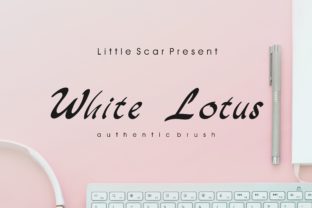
At its heart, White Lotus represents a specific approach. It is a brush designed with a focus on authenticity and a clean, uncluttered experience. This isn’t about an overwhelming array of digital settings or complex physical mechanics. The distinction of White Lotus lies in its commitment to a straightforward, purpose-driven form. It offers a direct and tactile connection to the medium, whether that’s digital ink or physical paint. The “simple, yet elegant” description points to a tool that avoids gratuitous features, prioritizing instead a reliable core performance that feels refined and intentional. This makes White Lotus distinct from tools that prioritize versatility through complexity.
Comparative Strengths and Typical Use Cases
When evaluating any tool, understanding its strengths relative to common alternatives is key. The primary strength of the White Lotus is its consistency and clarity of output. For tasks requiring a uniform stroke, a clean line, or a predictable texture, it often performs with notable reliability. Its elegance is not merely visual; it translates into a reduced cognitive load for the user. You are not managing dozens of brush dynamics or pressure curves; you are working with a well-tuned, singular instrument.
This makes White Lotus particularly well-suited for certain design occasions. It excels in:
- Interface and Icon Design: Where clean lines, precise edges, and consistent stroke weights are paramount.
- Lettering and Logotype Sketching: Providing a dependable flow for exploring letterforms without tool-induced variability.
- Minimalist Illustrations: Projects that rely on clarity of form and where the tool should not introduce unintended artistic noise.
- Pattern and Texture Creation: When generating repeating elements that require absolute uniformity.
In these scenarios, the White Lotus brush can feel like a trusted partner, reducing friction and allowing the designer to focus on the idea rather than the tool’s configuration.
Trade-offs and Limitations in a Diverse Toolkit
However, no single tool is optimal for every situation. The very simplicity that is White Lotus’s strength can become a limitation in other contexts. Design projects often demand a range of expressive marks—from rough, textured strokes to soft, fading washes. A tool that excels at consistency may lack the inherent variability needed for more organic, painterly, or highly stylistic work.
Compared to more adaptable or multi-feature brushes, White Lotus may present trade-offs. These alternative tools often offer:
- Dynamic Response: Adjustable settings for pressure, angle, and velocity, creating a wider spectrum of strokes from the same tool.
- Texture Libraries: The ability to mimic specific natural media like charcoal, watercolor, or oil paint.
- Contextual Versatility: Functioning as several different brushes in one, adaptable to changing needs within a single project.
The White Lotus brush, by focusing on authenticity in one mode, may not provide this level of internal versatility. Therefore, a designer who primarily works on expressive illustration, concept art, or projects requiring rapid stylistic shifts might find White Lotus too constrained. It is often a specialist, not a generalist.
Decision Factors: When White Lotus Is the Right Fit
Choosing whether to integrate White Lotus into your primary workflow depends on several practical factors. Consider your most common project types. If your work leans heavily towards clean, digital, or vector-adjacent design where precision and replication are valued, White Lotus could be a highly efficient choice. Its reliability saves time spent on correcting inconsistent tool output.
Also evaluate your personal working style. Do you prefer mastering a few simple tools deeply, or do you enjoy the exploratory process of configuring and combining many complex tools? The White Lotus aligns with the former philosophy. It is for the designer who finds freedom in limitation, who believes that a clear, unimpeded tool channel leads to clearer ideas.
Finally, assess your toolkit’s current gaps. If you already have a suite of versatile, expressive brushes, adding White Lotus could provide that missing pillar of predictable precision. Conversely, if your kit is already lean and precise, adding a more dynamic alternative might offer the expressive range you lack.
Realistic Examples in Practice
Imagine a designer creating a set of UI icons for a mobile application. They need every icon to share a cohesive line weight and corner treatment. Using a highly dynamic brush might accidentally introduce slight variations in stroke opacity or thickness, requiring manual cleanup. Using the White Lotus brush, the designer can rely on its consistent output, speeding up the process and ensuring visual unity across the icon family.
In another scenario, a graphic designer is sketching initial logo concepts. They need to quickly iterate on clean, scalable shapes. The authentic feel of White Lotus helps them think in terms of final vector art, avoiding the temptation to add overly artistic, non-scalable textures early in the process.
However, for a children’s book illustrator creating lush, textured forest scenes, the same designer might switch to a different brush entirely. The White Lotus’s elegant uniformity would struggle to create the varied, organic bark textures, leafy canopies, and soft fur details required. Here, the project demands a tool with a different set of priorities.
When to Consider Other Options
White Lotus may not be the right choice if your primary work involves:
- Highly expressive or abstract art where tool unpredictability is a desired creative element.
- Direct emulation of traditional media like oil painting or wet watercolor, which require specific, complex texture algorithms.
- Rapid prototyping across vastly different styles, where one project needs a gritty comic book feel and the next needs a soft pastel look.
- Workflows that depend on heavily customized brush presets you’ve built over years; the White Lotus approach might not integrate seamlessly.
In these cases, exploring brushes designed for maximal versatility or specific stylistic emulation would be a more pragmatic path. The goal is to match the tool’s core philosophy with the project’s core requirements.
Making an Informed Decision for Your Process
Ultimately, the value of a tool like White Lotus is not in being the “best” brush, but in being the right brush for specific intentions and situations. Its authentic, simple, and elegant nature offers a clear benefit: reducing variability and focusing execution. This can lead to faster, more predictable results in domains where that is prized.
The informed decision comes from honest reflection about your own work. Do you often feel hindered by overly complex tool settings? Do you crave a more direct connection between your intent and the mark made? If so, White Lotus merits serious consideration as a foundational or complementary tool. If your creativity is fueled by exploration and the happy accidents of complex tools, then White Lotus might serve best as a niche instrument for those occasional projects demanding pure precision.
By understanding its distinct place—not as a universal solution, but as a refined specialist—you can better evaluate whether the White Lotus brush aligns with your design occasions. Integrating it, or choosing an alternative, becomes a strategic choice based on the actual demands of your practice, leading to a more efficient and satisfying creative toolkit.