The Enduring Appeal of Handwritten Typography: Why Rowley Script Defines Modern Visual Communication
In an era dominated by digital uniformity, there is a quiet but unmistakable counter-movement reshaping how brands, designers, and everyday creators think about visual expression. The resurgence of handwritten typography is not merely a nostalgic nod to the past. It reflects a deeper cultural craving for warmth, individuality, and human connection in a screen-saturated world. At the intersection of this movement sits Rowley Script, a delicate handwritten font that has captured the attention of professionals and enthusiasts alike. Its graceful letterforms, organic rhythm, and versatile personality make it far more than a decorative typeface. It is a strategic design asset that speaks directly to contemporary tastes and emotional needs.
Understanding Rowley Script Beyond the Surface
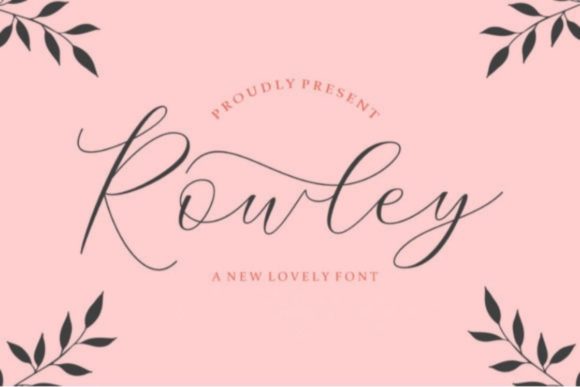
Rowley Script is best described as a refined handwritten font with a distinctly personal touch. It features a varying baseline that mimics the natural inconsistency of human penmanship, smooth flowing lines that guide the eye effortlessly across each word, and an extensive set of glyphs that elevate even the simplest text into something memorable. The inclusion of stunning stylistic alternates gives designers remarkable flexibility, allowing them to tailor letterforms to suit specific moods, layouts, or branding requirements. When you examine it closely, you notice that every curve and terminal has been carefully considered to feel spontaneous yet polished. That balance between casual charm and professional finish is precisely what makes Rowley Script so compelling.
Unlike rigid geometric sans-serifs or overly formal serif families, a handwritten font like Rowley Script communicates something that structured typefaces simply cannot replicate at scale. It suggests that a real person invested time and care into the message. In an age where consumers are increasingly skeptical of automated communications and mass-produced design, that suggestion carries significant weight.
The Broader Cultural Shift Toward Authenticity in Design
To understand why Rowley Script resonates so deeply, it helps to step back and examine the cultural currents shaping creative industries. Over the past decade, there has been a well-documented shift away from sterile perfectionism in design. Audiences have grown weary of hyper-polished visuals that feel corporate, distant, or algorithmically optimized. Instead, they gravitate toward warmth, imperfection, and what feels like genuine human expression. This trend manifests across multiple domains. In interior design, handmade ceramics and visible brushstrokes are prized over machine-finished surfaces. In photography, film-inspired grain and natural light have supplanted overly retouched imagery. And in typography, handwritten fonts have emerged as powerful tools for signaling sincerity.
Rowley Script enters this landscape not as a fleeting trend piece but as a mature reflection of these evolving preferences. Its varying baseline alone tells a story. Where uniform letter placement can feel mechanical, the gentle rise and fall of characters in a handwritten font evokes the subtle imperfections of a pen moving across paper. It reminds the viewer, often subconsciously, that a human hand guided the creation. That emotional resonance is invaluable in an increasingly automated world.
Why Designers, Brands, and Entrepreneurs Are Paying Attention
The growing attention around Rowley Script reflects a practical recognition among professionals that visual identity must now do more than look good. It must also feel good. In competitive markets where products and services are increasingly commoditized, the emotional layer of branding becomes a critical differentiator. A handwritten font carries an implicit message that a sans-serif headline simply does not. It says: This is personal. This was made for you. This comes from a place of care.
Small business owners and entrepreneurs have been particularly quick to embrace this shift. A wedding stationery designer choosing Rowley Script for invitation suites understands that couples are not simply buying printed paper. They are investing in a tactile keepsake that sets the emotional tone for one of the most significant days of their lives. The font's delicate character and gorgeous alternates allow each invitation to feel bespoke, even when produced at volume. Similarly, a boutique brand using the font on thank-you cards or packaging inserts transforms a routine transactional touchpoint into a moment of genuine warmth. These small gestures accumulate, building loyalty and trust over time.
The Role of Glyphs and Alternates in Customization
One of the underappreciated strengths of Rowley Script lies in its technical richness. The availability of stunning alternates and a robust glyph set means that designers are never locked into a single visual interpretation. By swapping standard characters for alternate forms, they can introduce subtle variations that prevent repetition from feeling monotonous. This is especially valuable in applications like logo design, where a single wordmark must convey personality at a glance. The ability to fine-tune individual letterforms without compromising overall cohesion gives creative professionals an extraordinary degree of control. It also aligns with the broader industry expectation that tools should be flexible enough to support bespoke outcomes, not just templated solutions.
Changing Workflows and the Rise of Accessible Design Tools
The relevance of Rowley Script cannot be separated from how design workflows have evolved. A decade or two ago, accessing high-quality fonts with extensive character sets required significant investment and technical expertise. Today, platforms have democratized typography, making professional-grade handwritten fonts accessible to freelancers, marketers, and even hobbyists working from a laptop. This democratization has fueled an explosion in creative output across social media, e-commerce, and independent publishing. More people than ever are designing their own materials, and they are doing so with an eye toward producing work that does not look amateurish.
Rowley Script fits neatly into this democratized landscape. It delivers a polished, sophisticated result without demanding that the user be a seasoned typographer. A freelance social media manager creating quote graphics for a client can apply the font and immediately elevate the visual impact. A content creator designing printable cards for an online shop can offer customers a product that feels artisanal. The font bridges the gap between capability and aspiration, which explains much of its broad appeal across skill levels and professional contexts.
Practical Applications That Demonstrate Versatility
While it is tempting to associate handwritten fonts primarily with feminine or romantic aesthetics, Rowley Script proves far more versatile than narrow categorization suggests. Its smooth lines and balanced proportions allow it to adapt to a wide range of applications, each drawing on different facets of its personality.
- Wedding Invitation Suites: The most intuitive application, where the font's delicate nature amplifies the romance and significance of the occasion. Used for names, dates, or meaningful quotes, it transforms stationery into heirloom pieces.
- Brand Identity and Logos: Businesses in lifestyle, wellness, hospitality, and creative services use Rowley Script to soften their visual presence. It pairs beautifully with minimalist sans-serif supporting text, creating a logo that feels approachable yet professional.
- Greeting and Thank-You Cards: The font shines in contexts where emotional sincerity is paramount. Its organic flow makes printed sentiments feel handwritten, bridging the gap between mass production and personal connection.
- Social Media Graphics and Quote Posts: Creators and marketers leverage the font to add warmth to inspirational or promotional content. In a feed dominated by bold sans-serifs, a touch of handwritten elegance stands out and invites a slower, more engaged read.
- Packaging and Product Labels: Artisanal food producers, candle makers, and craft brands use handwritten typography to signal small-batch authenticity. Rowley Script reinforces the message that care went into both the product and its presentation.
Each of these applications speaks to a different audience and serves a distinct purpose, yet all rely on the same underlying quality. The font communicates humanity. Whether a consumer consciously registers it or not, that underlying signal affects how they perceive the message and the messenger.
Connecting Handwritten Typography to Larger Industry Developments
The growing prominence of fonts like Rowley Script also reflects deeper structural changes in how visual content is created and consumed. Mobile-first browsing, vertical video formats, and ephemeral social content have all compressed the time audiences spend with any single piece of design. In that fleeting window, emotional impact must be immediate. Handwritten typography achieves this by activating familiar, comforting associations before the viewer even reads the words. The shape of the letters does part of the communicative work, bypassing rational analysis and connecting directly with feeling.
At the same time, the rise of personal branding has placed unprecedented typographic demands on individuals. Coaches, consultants, authors, and speakers now operate as micro-businesses, each needing a cohesive visual identity that expresses who they are. Rowley Script offers a way to infuse personality into logos, website headers, and promotional materials without overwhelming the design. It plays well with neutral color palettes and clean layouts, adding just enough warmth to humanize a brand without sacrificing professionalism.
From Static to Experiential Design
Another relevant industry shift involves the expansion of typography from static print contexts into experiential and environmental design. Event signage, pop-up installations, and immersive retail spaces increasingly use typographic choices to shape atmosphere. A handwritten font displayed at scale on a welcome sign or a menu board instantly warms the environment. It signals that the space values intimacy and personality over institutional formality. While Rowley Script is often discussed in the context of paper goods, its potential extends into any medium where emotional tone matters. The smooth lines and gorgeous glyphs that make it beautiful on an invitation also make it compelling when rendered large or illuminated.
Why Quality Typography Is a Business Decision
There is a tendency among those outside the design field to view font selection as a purely aesthetic choice. In practice, it is deeply strategic. Typography influences readability, sets expectations, and frames how information is received. Choosing a handwritten font like Rowley Script is not simply about making something look pretty. It is about aligning visual language with brand values, audience expectations, and communication goals. A financial services firm would likely not benefit from using it in annual reports, but a creative studio, an independent retailer, or a personal brand might find it precisely the right tool to convey approachability and individual care.
This strategic dimension is what separates thoughtful font usage from decorative impulse. Professionals who understand the psychology of typography know that Rowley Script works best when it amplifies an already coherent message. Its varying baseline and delicate character support narratives of craftsmanship, personal attention, and emotional investment. Used in the right context, it does not just decorate content. It deepens meaning.
The Future Relevance of Handwritten Fonts
Looking ahead, the relevance of handwritten typography is unlikely to diminish. If anything, as artificial intelligence and automated content generation become more pervasive, the premium placed on human-coded signals will only increase. Consumers will continue to seek out evidence that real people stand behind the products, services, and messages they encounter. Typography will remain one of the most accessible and effective ways to encode that human presence into visual communication.
Rowley Script is well positioned within this trajectory. Its timeless quality transcends short-lived design fads. It does not rely on gimmicks or excessive ornamentation. Instead, it draws its strength from fundamentals. Smooth, flowing lines that guide the eye. A baseline that breathes. Glyphs that reward close attention. Alternates that invite customization. These are enduring qualities, not seasonal trends. As long as people value connection, warmth, and craft, fonts like Rowley Script will have a meaningful role to play in how we communicate visually.
For professionals, creators, and entrepreneurs navigating an increasingly noisy visual landscape, the lesson is clear. The tools you choose to express your message matter. A handwritten font is not a retreat from modernity. It is an embrace of what modernity often forgets. That behind every design, every brand, and every communication, there is a person hoping to connect with another person. Rowley Script helps make that connection beautiful, memorable, and undeniably human.